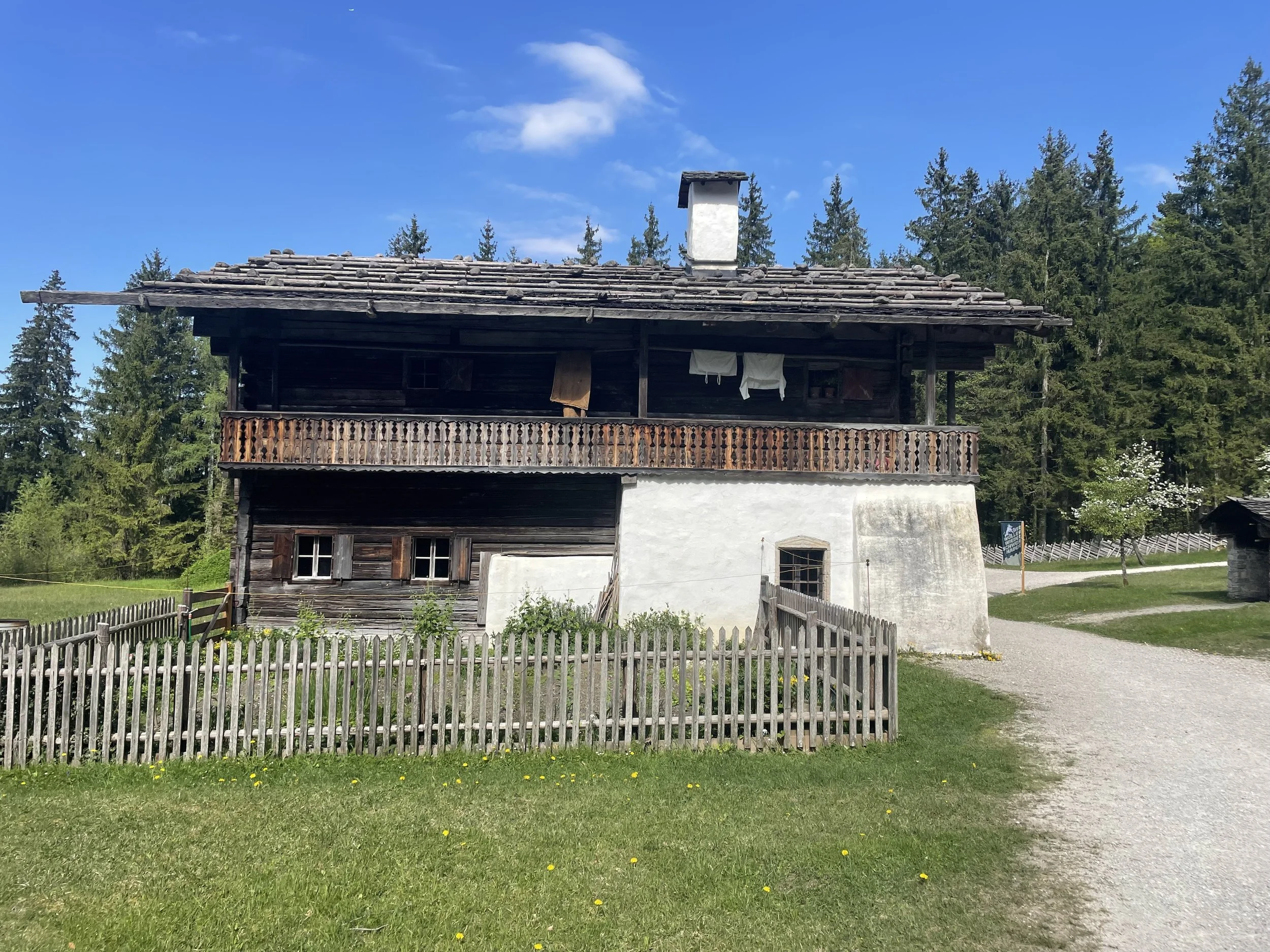
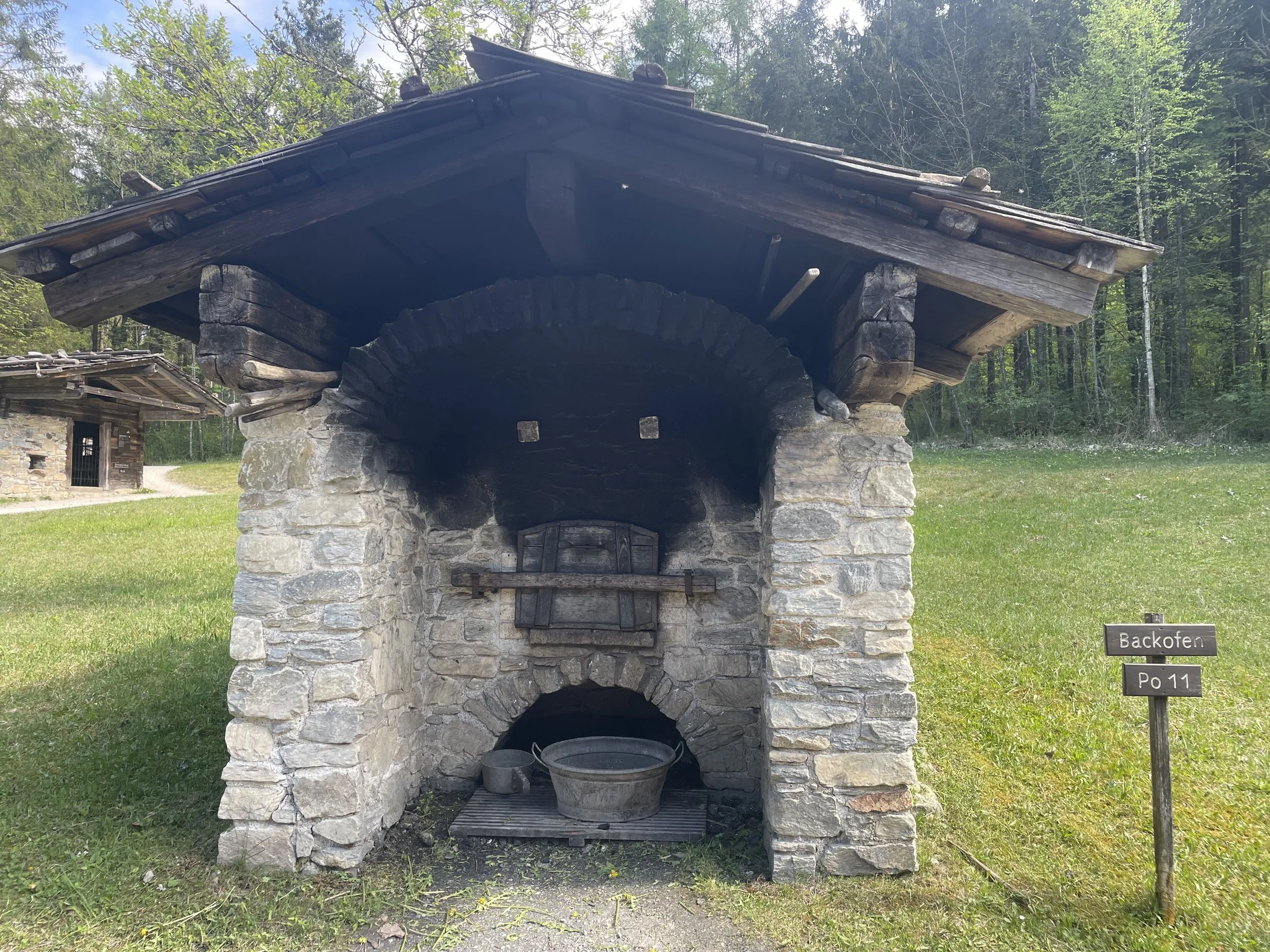
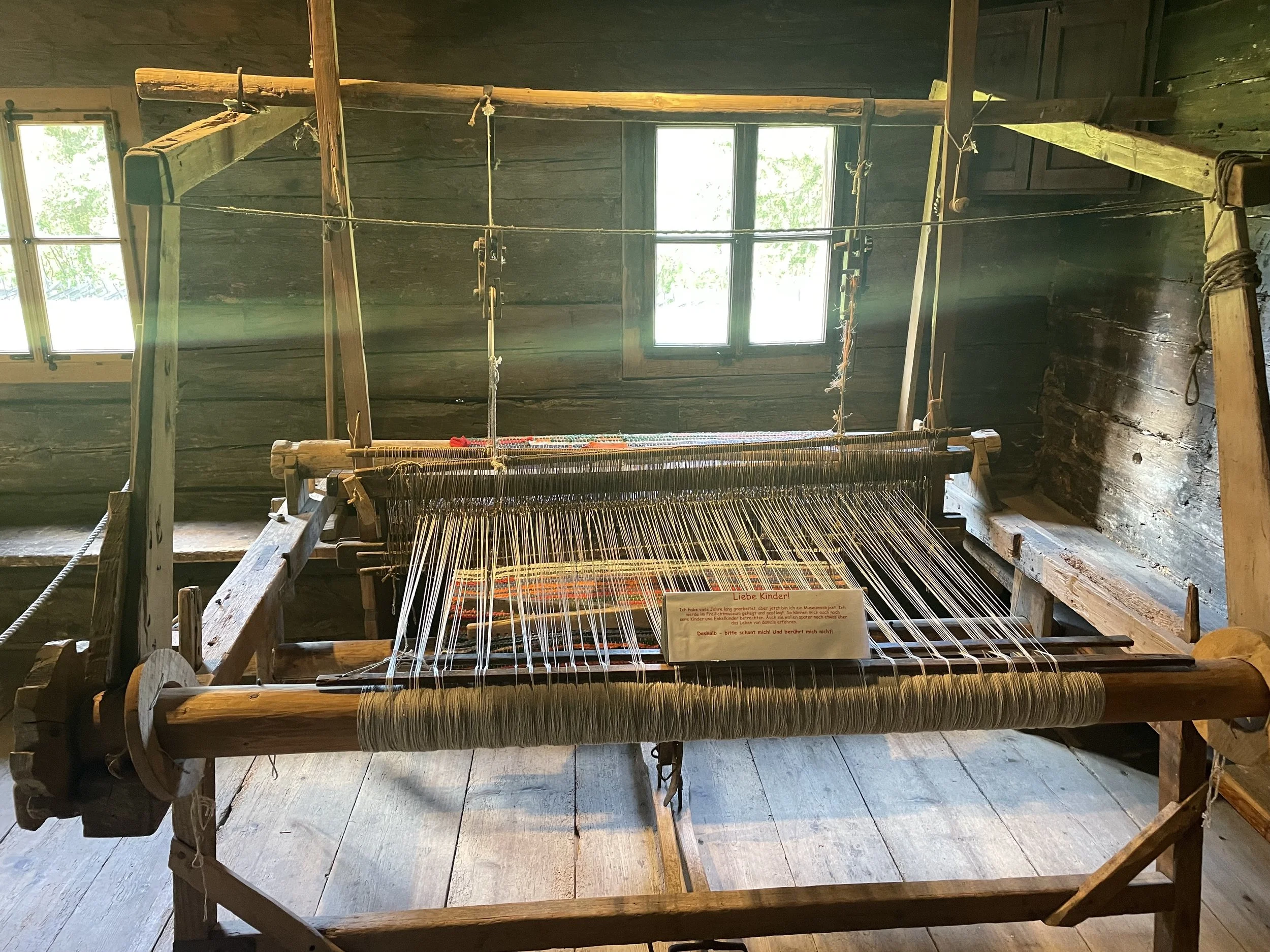
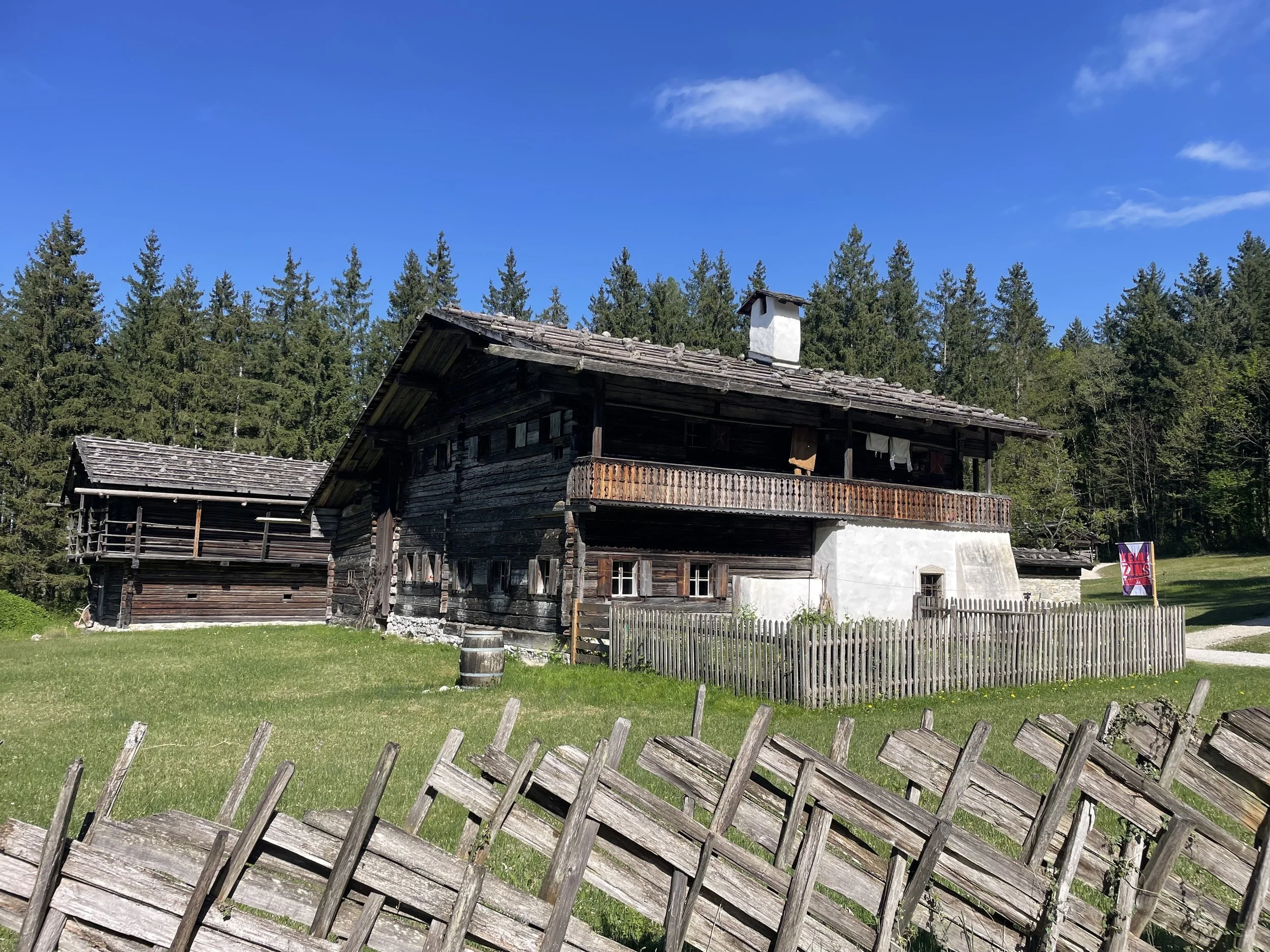
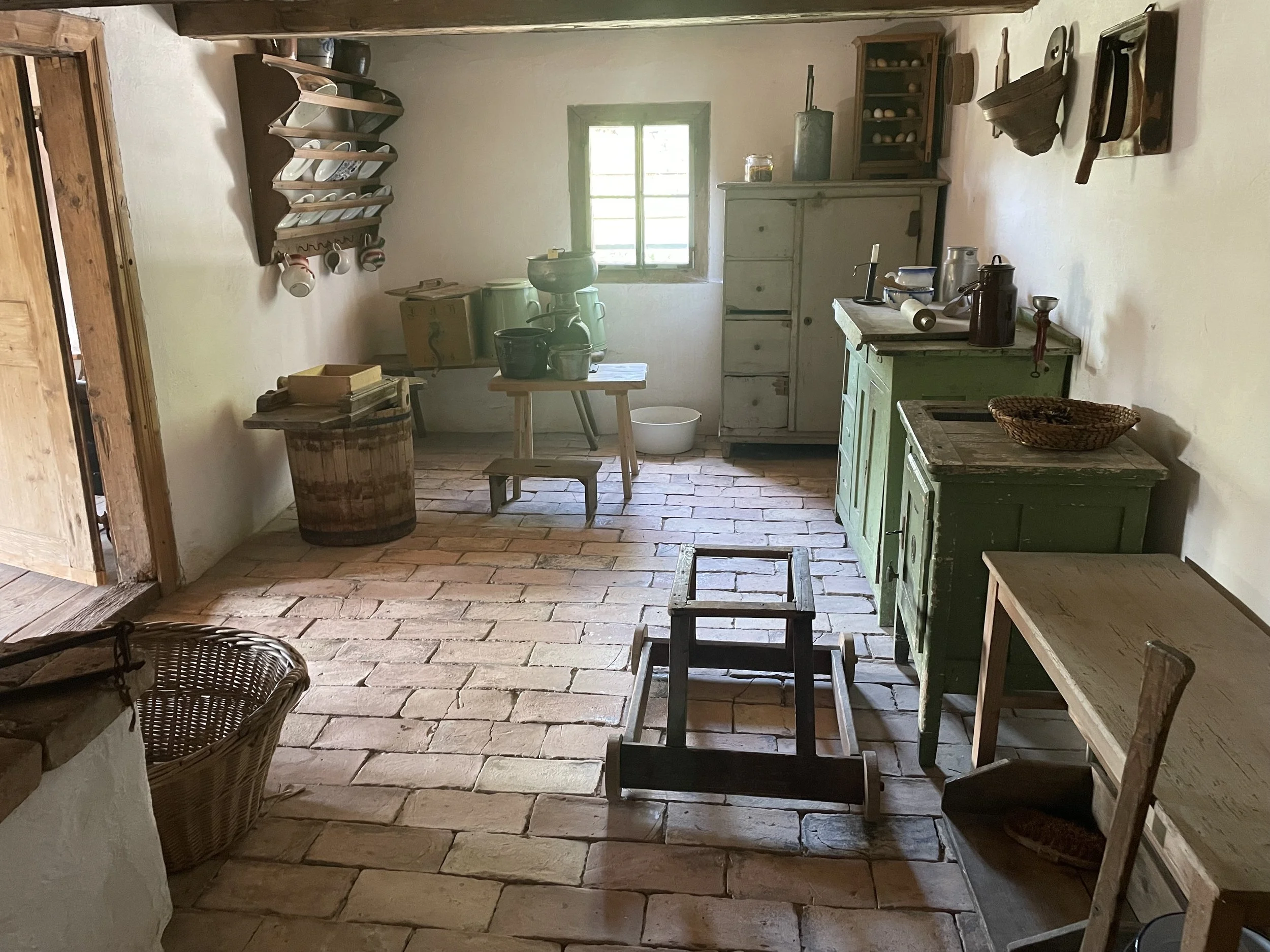
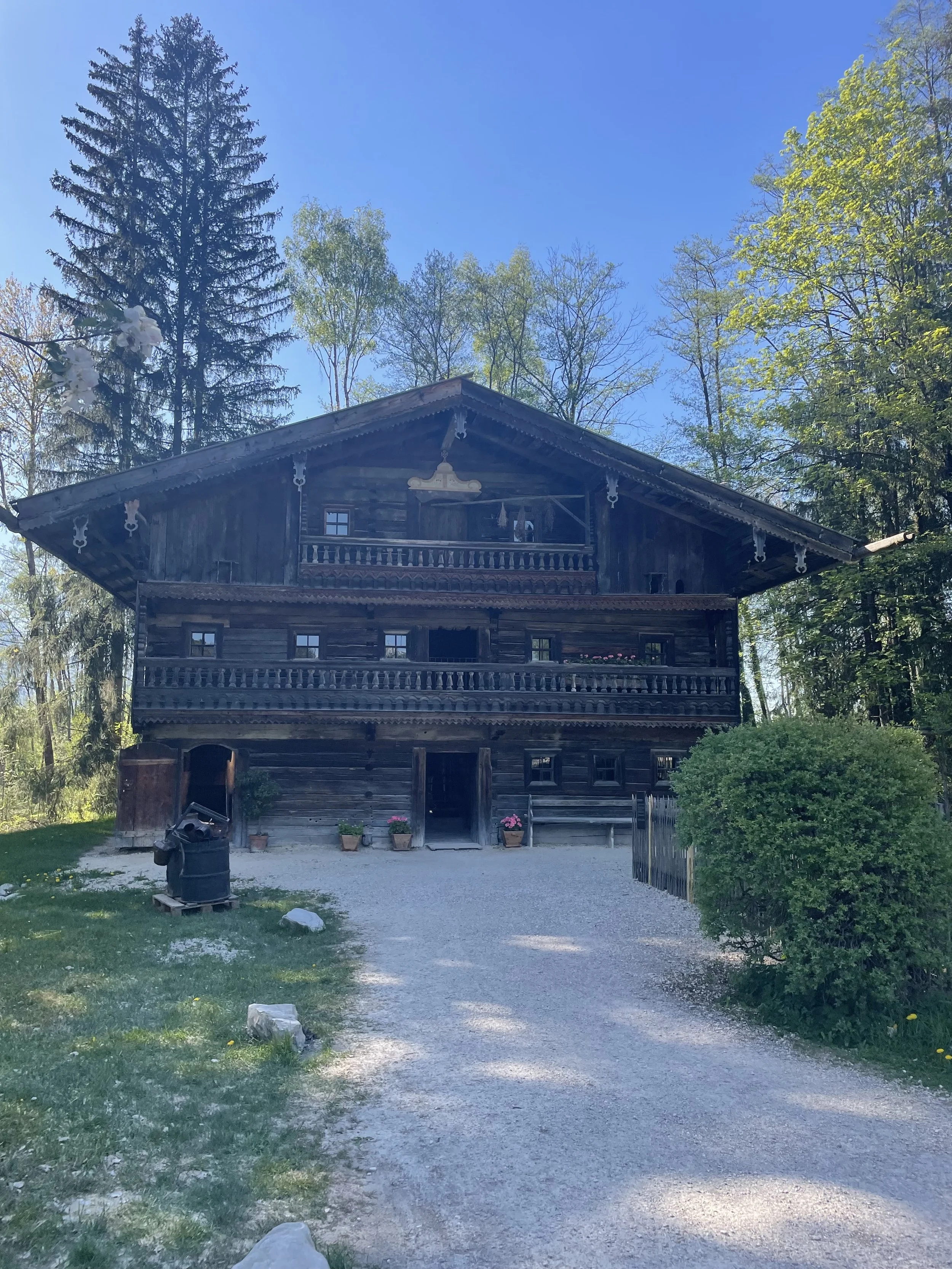
There is a museum on the way to Bad Ischl that is a large open-air museum that recreates rural life in the Salzburg region over the past several centuries, with dozens of original farmhouses, barns, workshops, and even a school. All houses are furnished which gives you the experience of how people lived and worked back then.
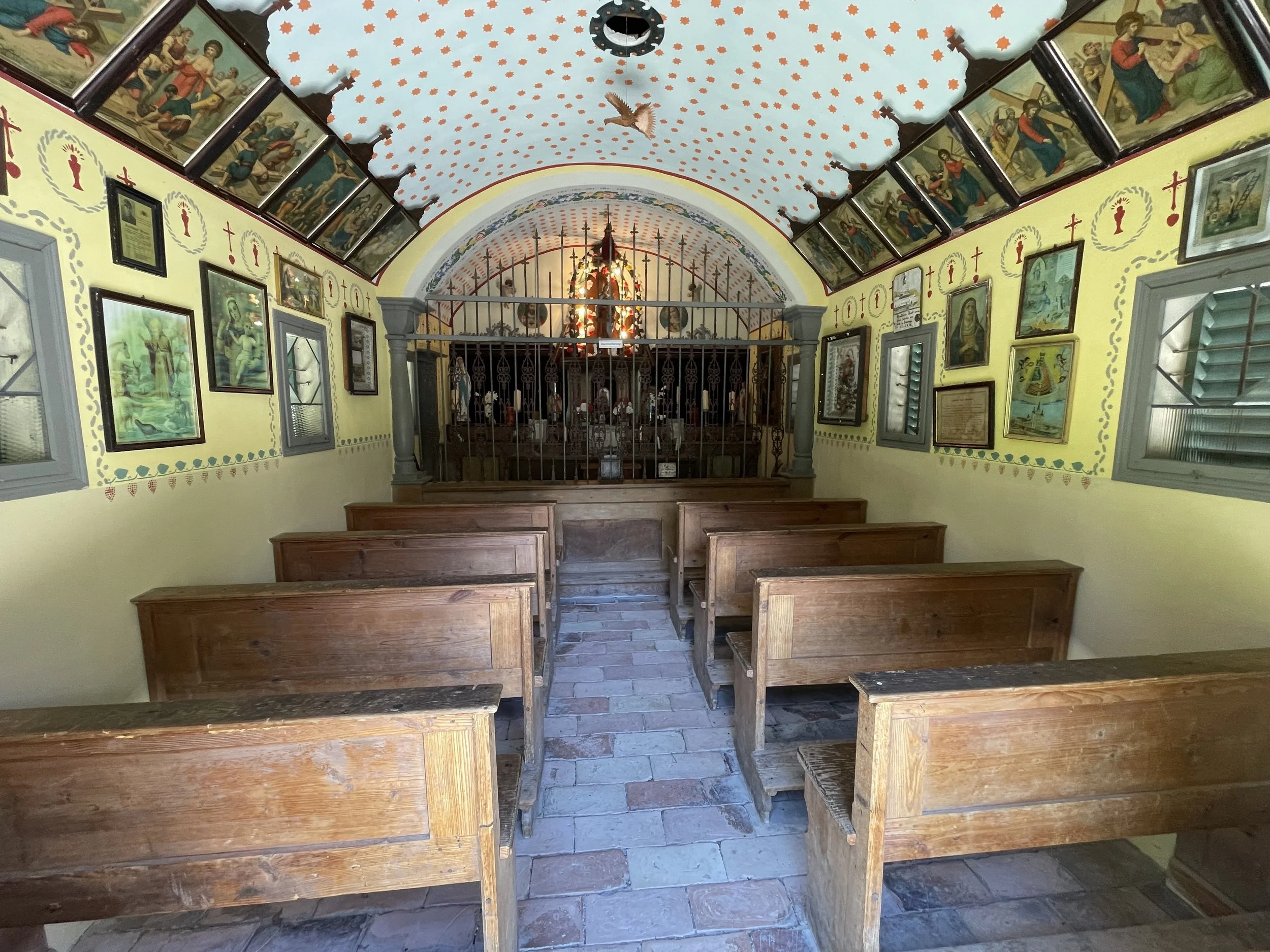
It was fascinating seeing how they built their homes and how they were still standing since the early 1500’s +. It held my attention for about 30 minutes but mum was absolutely enthralled and loved seeing all the old fashioned kitchens and stable areas and church and the way they structured the building and roofs with large rocks scattered all over the roof with the intention to hold the tiles/ timber in place.
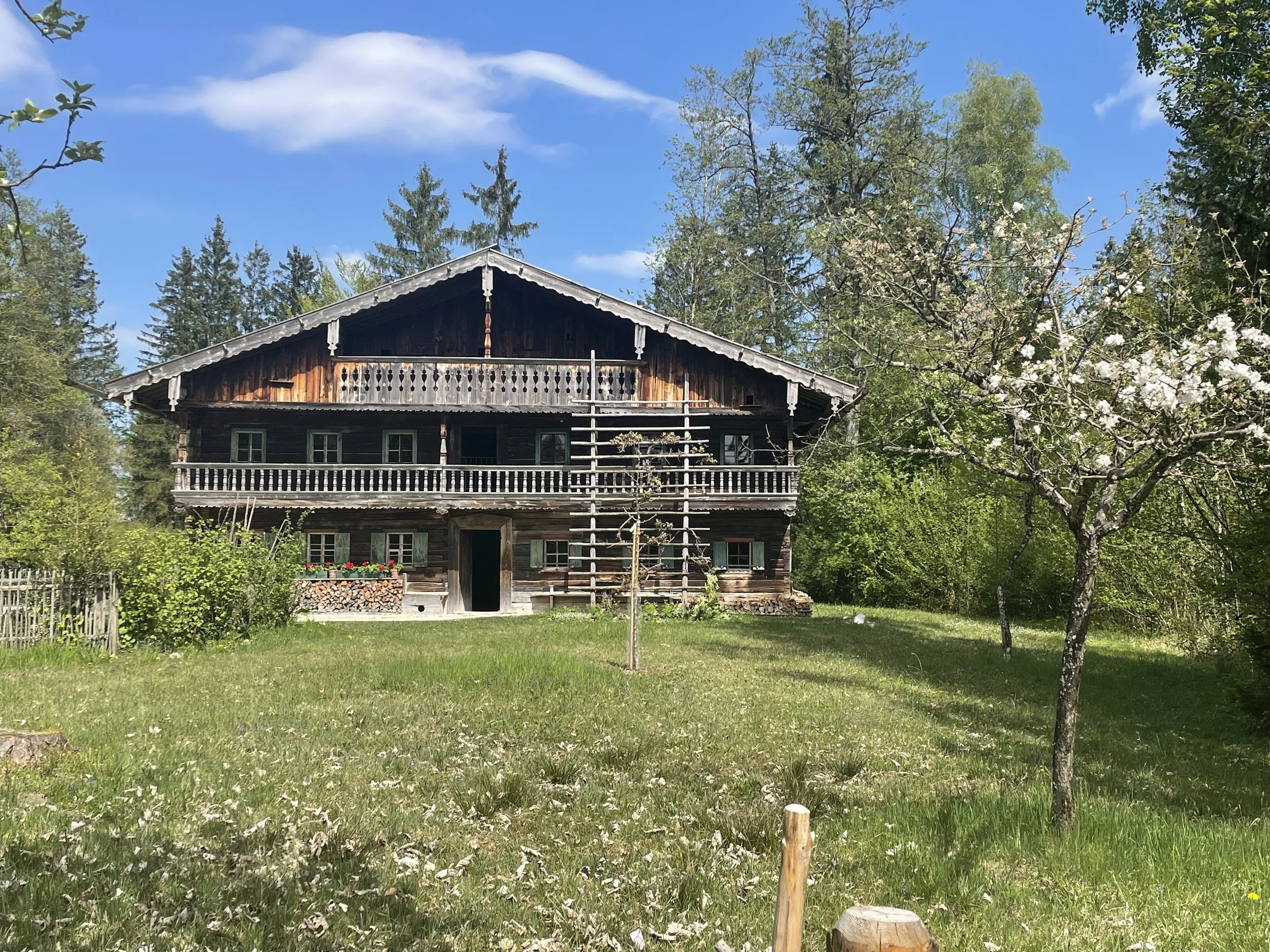
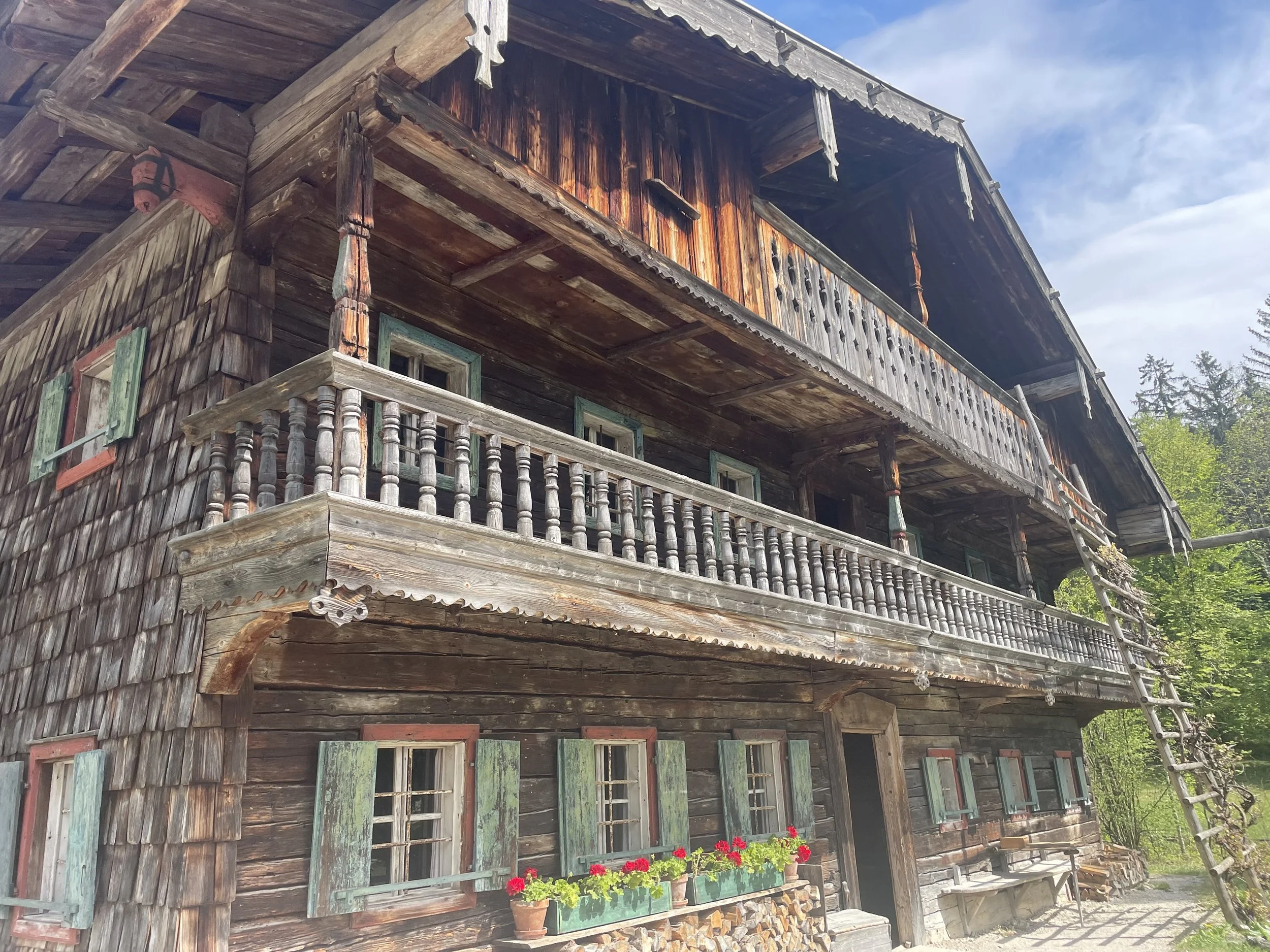
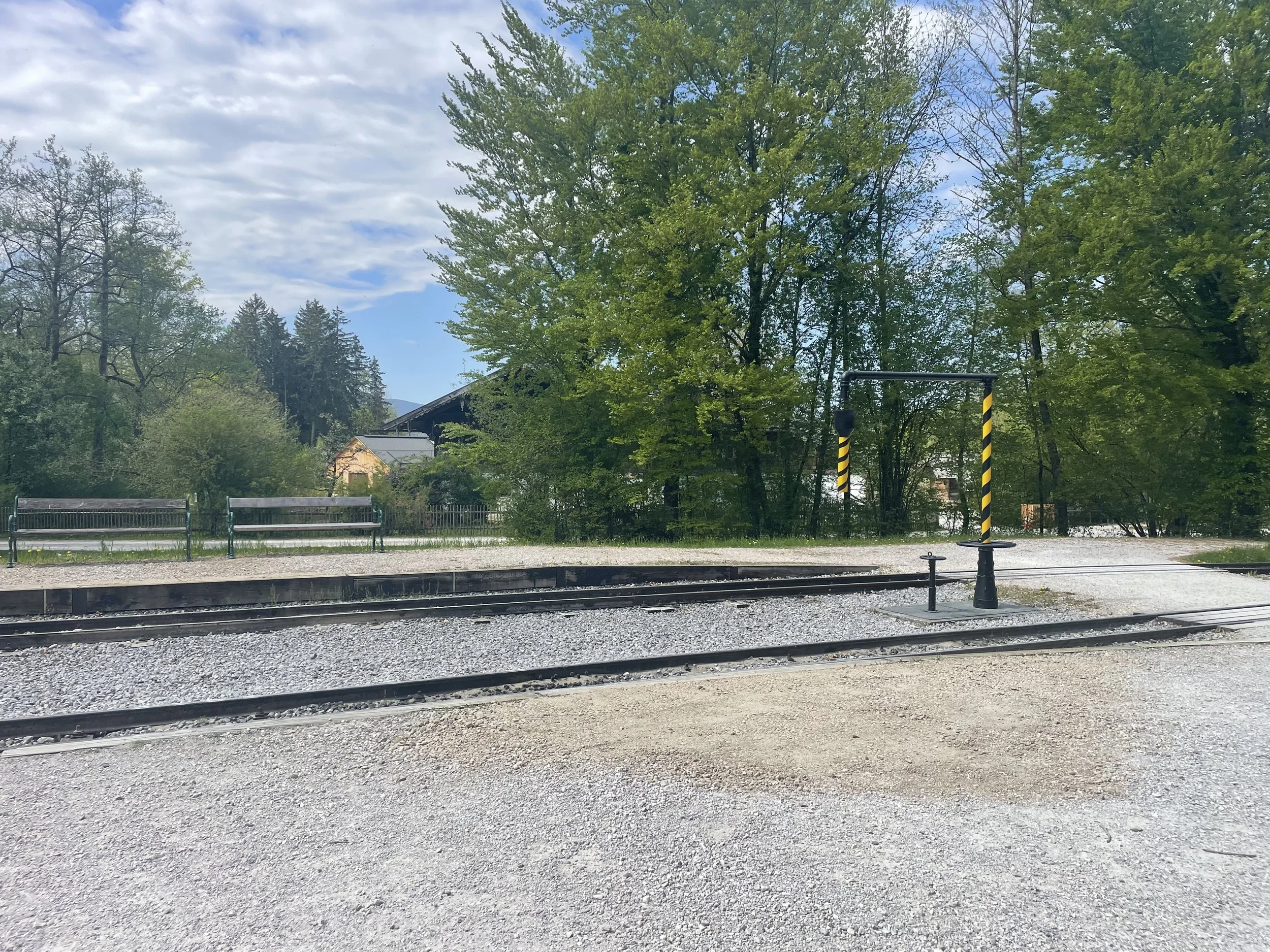
The highlight for me was the adorable train that goes around 9km/ hour at top speed and loops around the site allowing you to hop on and off and when I received a text message from my phone carrier saying congratulation “Welcome to Germany”. Without even knowing it we must have gone to a section of the display which was in Germany!
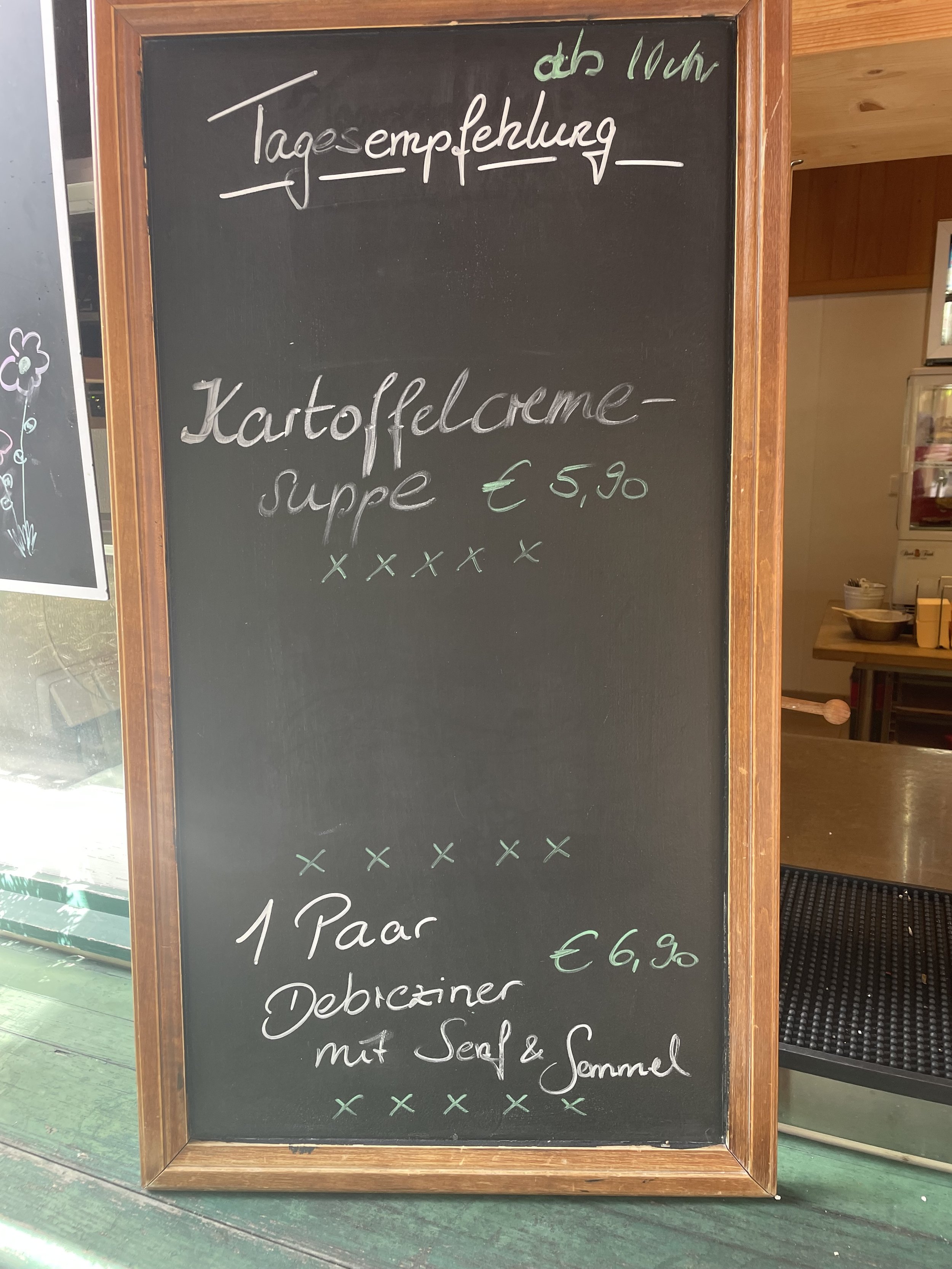
We had 2 options for lunch - Potatoe Soup or Semel and Sausage
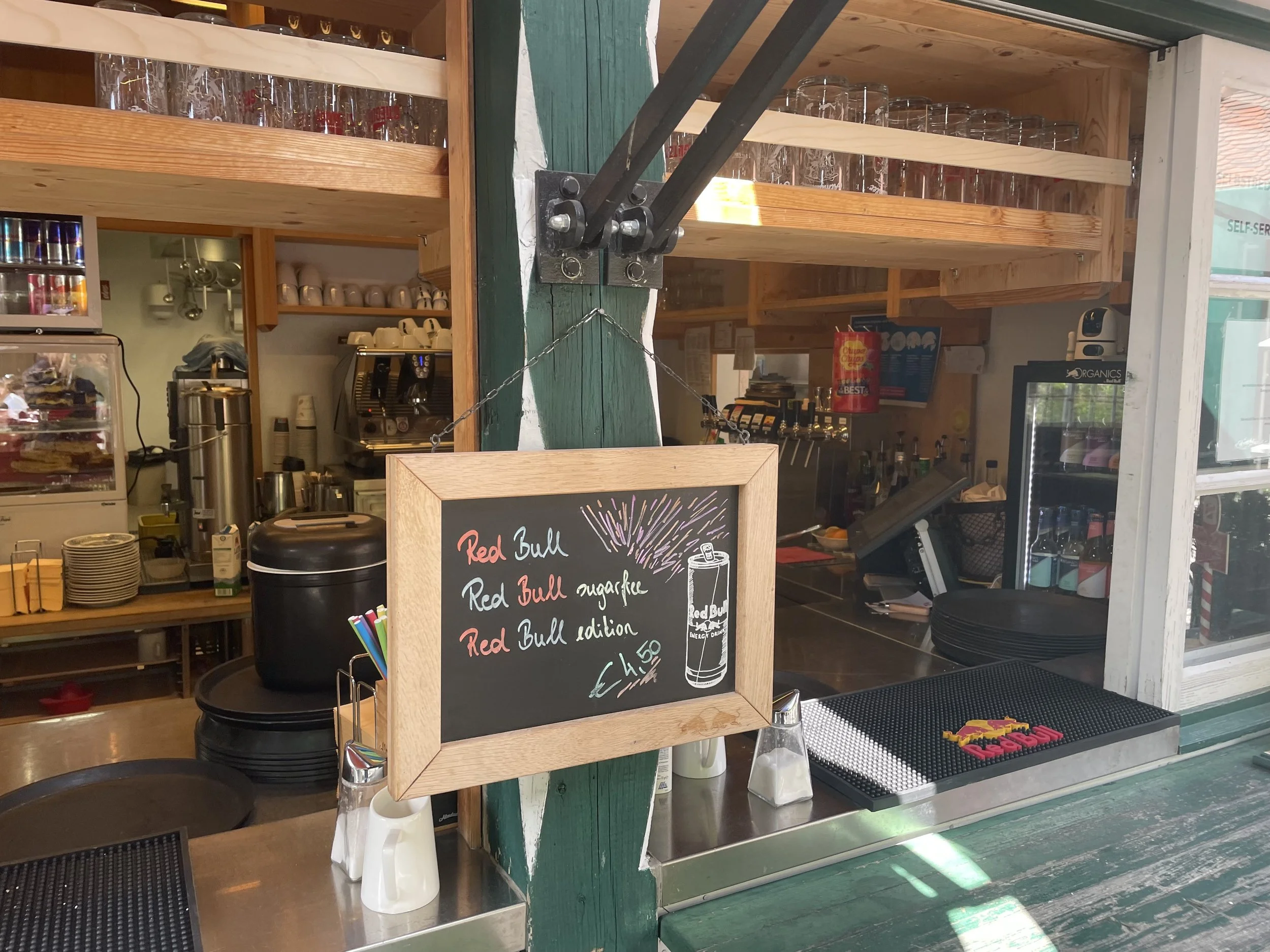
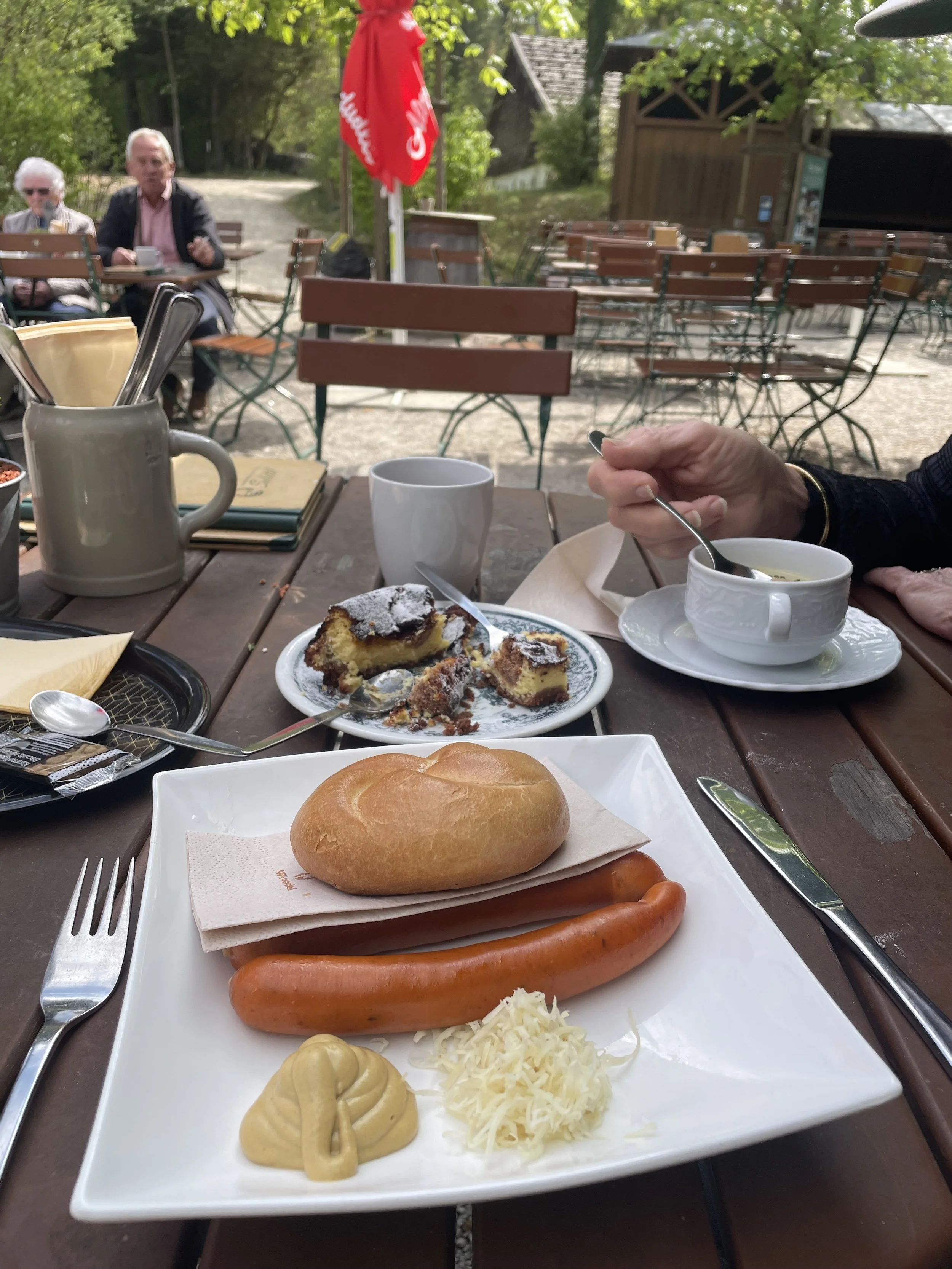
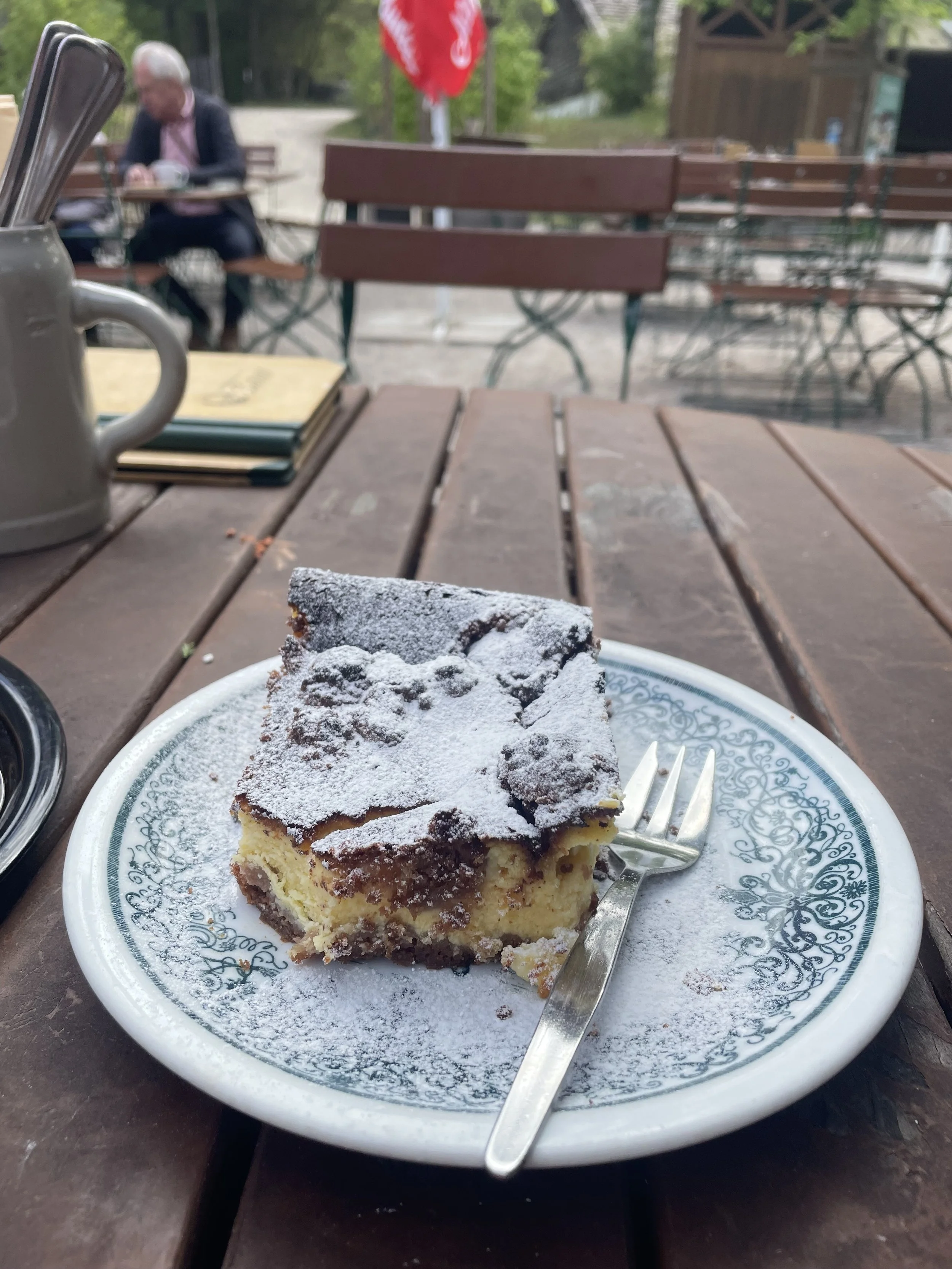
Lunch was yum but the stand out was the cake. We thought we would just have a small bite before lunch ( as they brought the cake first for some reason) and we ended up demolishing the cake before lunch came.
When we stopped at our last destination the conductor jumped off to say farewell and we had a great chat with him regarding the history of the farmers revolution and how the city of Salzburg has evolved since then.
Just to summarise the revolution was actually part of bigger peasant uprisings in Austria and southern Germany, especially the German Peasants’. The uprising came about as the farmers were unhappy because they had to pay heavy taxes, do forced work, and lost old rights like using forests or hunting. In Salzburg there were also later small uprisings against strict rulers like the archbishops. The printing press was invented and people were able to spread their ideas using printed pamphlets to share their news and opinions across different areas. This meant that ideas for rebellion could travel faster between villages and regions, helping different groups of peasants realize they shared the same problems.